
Smart Home 2.0: The Convergence of IoT Protocols and Seamless Living
2026-02-08 by R. B. Mohammad Galih E. L.
English :
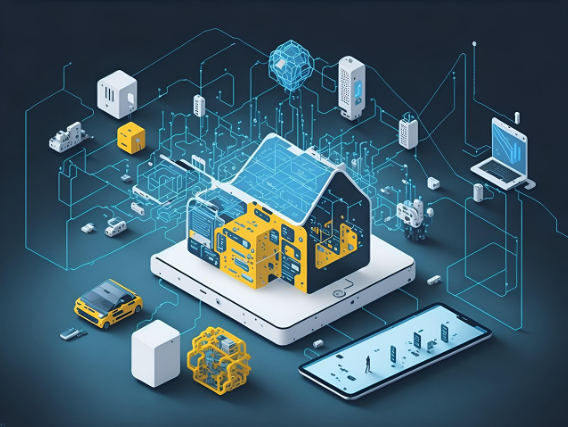
In an era before widespread access to technology, domestic chores—such as washing dishes, lighting fireplaces to ward off the cold, and manually locking doors—relied entirely on human effort. There was no alternative but to physically address these tasks head-on. However, this slowly changed as technology made daily life increasingly convenient. Automating repetitive household activities, such as lighting, temperature control, or security, became possible for basic comfort. But wait a moment. There is a technological concept that makes simple automation seem ordinary: the smart home. The primary difference between these two concepts lies in connectivity: while home automation can function without the internet, a smart home connects devices to the internet with a singular purpose—to be remotely controllable, mutually integrated, and capable of understanding user intent. Consequently, the goals are comfort, personalization, and ease of control via smartphone from anywhere. In essence, while all smart homes utilize automation, not all automation qualifies as a smart home [1].
However, domestic intelligence is not uniform. Smart homes can be categorized into five levels based on technological sophistication. First is the Traditional Home; as the name implies, everything is controlled manually. Second is Piecemeal Automation; individual devices can be controlled via apps and are affordable, but they cannot communicate with one another. Third is Limited Integration; some devices communicate with the help of professional providers, installed entirely by their teams. However, the downside lies in conflict and instability due to incompatibility with devices outside that specific ecosystem. Fourth is Full Integration; this level specializes in the seamless merging of devices, providing the key to the simplicity and stability users seek. Fifth is Ambient & Invisible; this system operates sophisticatedly and naturally. Moreover, this smart home is sensitive to human intent and interacts with our changes, adjusting the environment according to human desires and preferences.[2]
Although the vision of this final level sounds ideal, the reality in the field is often not as beautiful as the theory. The biggest challenge in IoT implementation is compatibility between devices from different manufacturers using diverse standards and protocols, which hinders system scalability [3]. This often triggers "app fatigue," [4] where users become exhausted from opening multiple different apps just to control devices that do not talk to each other. Furthermore, security and privacy issues pose serious threats; internet-connected IoT devices are vulnerable to cyberattacks, sensitive data theft, and privacy violations if their security systems are unreliable. Without secure and seamless integration, technology meant to simplify life can instead become a new burden [5].
Despite these integration challenges, if implemented correctly, this technology offers efficiency far beyond mere app-based convenience. One clear proof is visible in the reduction of energy consumption and peak costs in HVAC (Heating, Ventilation, and Air Conditioning). IoT automation works with active control loops—sensors send data at regulated sampling frequencies to controllers. The controller then executes real-time control loops and drives actuators (such as Variable Speed Drives) to achieve thermal targets and proper air quality. Furthermore, the IoT program incorporates setbacks (HVAC control strategies), occupancy-based modes, and external inputs. All of this serves to determine when and how hard the unit must work, resulting in cost reductions of approximately 20–40% depending on usage [6]. Beyond HVAC, IoT also provides preventive security. Because devices are always connected and data is processed in real-time, the system automatically takes action before unwanted incidents escalate. The system can detect anomalies, send evidence and notifications to the user, and execute preventive measures if necessary [7]. Finally, IoT can apply the concept of Human Centric Lighting (HCL), a lighting approach that prioritizes human biological needs—specifically the circadian cycle. IoT can adjust color temperature, light intensity, and automated schedules to follow the day's natural rhythm, which is highly useful for significant improvements in sleep quality, mood, alertness, and recovery through timely light exposure [8].
Indonesia :
Pada zaman dimana manusia belum mempunyai akses teknologi, semua kegiatan rumahan seperti mencuci piring, menyalakan perapian ketika hawa suhu terasa dingin, dan mengunci pintu rumah dilakukan dengan tenaga manusia; tidak ada cara lain selain datang dan berhadapan langsung dengan masalah tersebut. Namun, itu semua perlahan berubah ketika teknologi membuat kehidupan sehari-hari semakin mudah. Otomatisasi aktivitas rumah yang repetitif seperti lampu, suhu, atau keamanan bisa dilakukan untuk kenyamanan dasar. Akan tetapi, tunggu sebentar. Ada satu konsep teknologi yang membuat teknologi otomatisasi itu terlihat biasa saja, yaitu smart home. Perbedaan utama kedua konsep ini terletak pada konektivitas: jika home automation bisa berjalan tanpa internet, smart home menghubungkan perangkat rumah ke internet dengan satu tujuan; bisa dikontrol jarak jauh, saling terintegrasi, dan memahami niat pengguna, sehingga tujuannya kenyamanan, personalisasi, dan kemudahan kontrol lewat HP dari mana saja. Intinya, semua smart home pasti pakai otomatisasi, tetapi otomatisasi belum tentu smart home. [1]
Namun, kecerdasan rumah ini tidaklah seragam. Smart home juga memiliki 5 tingkatan berdasarkan seberapa canggih teknologi yang dipakai. Pertama, traditional home; seperti namanya, semuanya dikontrol manual. Kedua, piecemeal automation; Tiap device bisa dikontrol aplikasi, murah, tetapi tak bisa berkomunikasi satu sama lain. Ketiga, limited integration; Beberapa perangkat bisa berkomunikasi lain dengan bantuan provider profesional, semuanya dilakukan oleh tim provider. Namun, kekurangannya terletak pada konflik dan instabilitas karena tak cocok dengan perangkat lain yang bukan dari tim tersebut. Keempat, full integration; Smart home ini terspesialisasi untuk penggabungan antar perangkat dengan mudah, memberikan kunci untuk kesederhanaan dan stabilitas yang dicari. Kelima, ambient & invisible; Sistem ini beroperasi dengan canggih dan alami. Lebih lagi, smart home ini peka dengan maksud manusia dan berinteraksi dengan perubahan kita sehingga perubahan dilakukan tergantung keinginan dan preferensi manusia. [2]
Meskipun visi tingkatan terakhir terdengar ideal, realitas di lapangan sering kali tidak seindah teori. Tantangan terbesar dalam penerapan IoT adalah masalah kompatibilitas antar perangkat dari produsen berbeda yang memiliki standar dan protokol beragam, sehingga menghalangi skalabilitas sistem [3]. Hal ini sering memicu fenomena app fatigue [4], di mana pengguna kelelahan karena harus membuka banyak aplikasi berbeda hanya untuk mengontrol perangkat yang tidak saling bicara. Selain itu, isu keamanan dan privasi menjadi ancaman serius; perangkat IoT yang terhubung ke internet rentan terhadap serangan siber, pencurian data sensitif, dan pelanggaran privasi jika sistem keamanannya kurang handal. Tanpa integrasi yang aman dan mulus, teknologi yang seharusnya memudahkan ini justru bisa menjadi beban baru [5].
Terlepas dari tantangan integrasi tersebut, jika diimplementasikan dengan benar, teknologi ini menawarkan efisiensi yang jauh melampaui sekadar kenyamanan aplikasi. Salah satu buktinya terlihat pada pengurangan konsumsi energi dan biaya puncak pada HVAC (Heating, Ventilation, and Air Conditioning). Otomasi IoT bekerja dengan loop kontrol aktif– sensor mengirim data dengan frekuensi sampling yang diatur, disesuaikan ke kontrol. Kontroler lalu menjalankan kontrol loop real-time dan menggerakkan aktuator (seperti variable speed drive) untuk mencapai target termal dan kualitas udara yang layak. Lalu, program IoT menggabungkan setback (strategi kontrol HVAC), mode berdasar ada/tidaknya orang, dan input eksternal. Semua ini untuk menentukan kapan dan seberapa keras unit harus bekerja. Hal ini menyebabkan pengurangan biaya, sekitar 20-40% tergantung pemakaian [6]. Selain HVAC, IoT juga memberikan keamanan preventif bagi pengguna. Karena perangkat selalu terhubung dan data diproses real-time, sistem otomatis membuat tindakan sebelum kejadian yang tidak diinginkan membesar. Sistem mampu mendeteksi anomali, mengirim bukti dan notifikasi ke pengguna, lalu memberikan langkah preventif bila perlu [7]. Terakhir, IoT bisa menerapkan konsep Human Centric Lighting (HCL), yakni pendekatan pencahayaan yang menempatkan kebutuhan biologis manusia–siklus sirkadian– sebagai prioritas. IoT bisa mengubah temperatur warna, intensitas cahaya, dan jadwal otomatis agar mengikuti ritme alami hari yang sangat berguna untuk beberapa peningkatan signifikan, seperti kualitas tidur, suasana hati, kewaspadaan, dan pemulihan lewat paparan cahaya yang datang tepat waktu [8].
Reference :
[1] https://visualcontrolsystems.co.uk/smart-home-vs-home-automation-explained/
[2] https://malo.vn/5-levels-smart-home-which-puzzle-fits-you-best
[3] https://www.cloudflare.com/learning/cloud/what-is-vendor-lock-in/
[4] https://www.iotforall.com/app-fatigue-smart-home-iot
[5]https://medium.com/@RocketMeUpCybersecurity/introduction-to-smart-home-cybersecurity-risks-a88a0feb6f1f
[6] https://intellisoft.io/how-to-benefit-from-an-iot-solution-for-hvac-tips-tricks/
[7] https://www.opticom.co.ke/how-iot-is-transforming-security-and-safety-solutions/
[8] https://www.uprtek.com/en/blogs/what-is-human-centric-lighting
You might also like
Hyperautomation: Why Single-Technology Solutions Are No Longer Enough
Hyperautomation integrates AI, ML, and RPA to create a smart, systemic, and adaptive business ecosystem for peak efficiency.
Find out more →
Beyond The Wrist: The Role Of Automation in Health Monitoring
Wearable automation uses advanced sensors to boost diagnostic accuracy and empower real-time personal health monitoring.
Find out more →
The Evolution of Automation: From Classical Control Systems to AI-Driven Paradigm
Industrial automation has evolved from rigid systems to a hybrid future combining classical control precision with AI.
Find out more →